
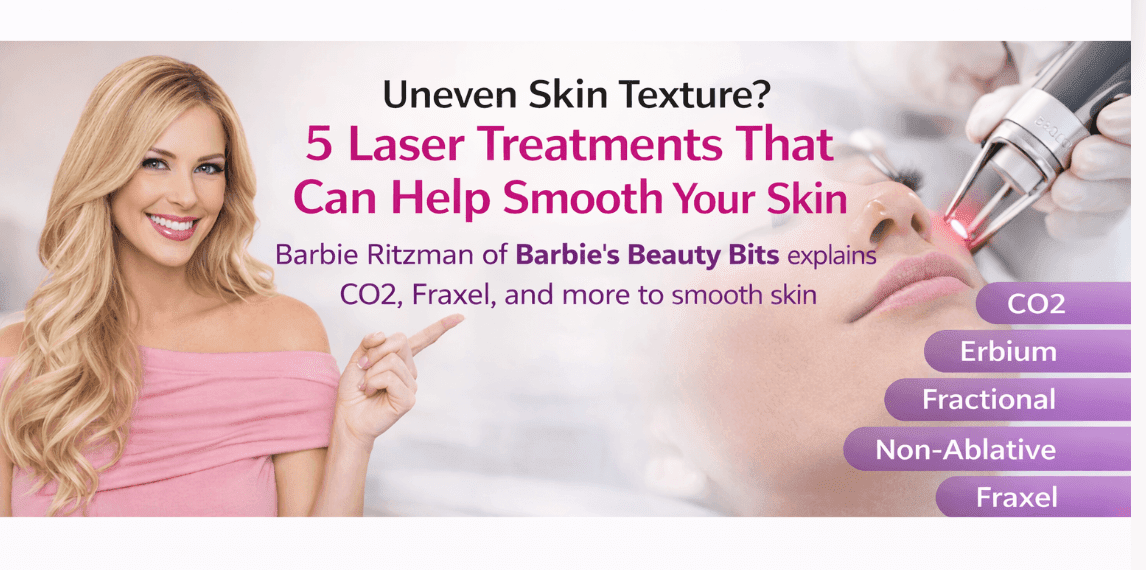


Uneven Skin Texture? 5 Laser Treatments That Can Help Smooth Your Skin
Answer
Laser treatments address uneven skin texture by resurfacing damaged layers and stimulating collagen. Options like CO2, erbium, fractional, non-ablative, and Fraxel lasers are tailored to specific concerns and downtime preferences.
Summary
If your skin is rough, bumpy, or uneven, you may need more than topical skincare. Modern laser technologies target deeper layers to refine pores, improve acne scars, and reduce sun damage. The best treatment depends on your skin’s condition, recovery time, and long-term goals.
Why Skincare Alone Can’t Fully Fix Uneven Skin Texture
While skincare products can help at the surface, certain laser treatments go deeper. They work beneath the top layer of skin to stimulate collagen production and encourage the formation of fresher, smoother skin. According to the American Society of Plastic Surgeons, laser skin resurfacing remains one of the most requested non-surgical cosmetic procedures in the United States. That says a lot. And here in St. Louis, people want smoother skin, and they’re willing to invest in treatments that actually work.
Top 6 Laser Treatments Help Smooth Uneven Skin Texture?
No. 1:
CO2 Laser Resurfacing for Deep Texture and Advanced Skin Renewal
CO2 laser resurfacing is one of the more powerful options. It has been used for decades and remains a trusted choice for significant texture concerns.
This laser removes the outer layers of skin and penetrates deeper into the dermis to trigger strong collagen remodeling. Because it works at a deeper level, it often produces more noticeable changes in skin texture after a single session than lighter treatments.
The trade-off is downtime. Healing can take longer, and redness may linger for several weeks. During recovery, skin typically feels tight and looks pink before gradually settling into a smoother appearance.
CO2 resurfacing is often described as a skin reset. It requires planning and patience, but the depth of improvement can be meaningful for people dealing with long-standing uneven texture.
No. 2:
Erbium Laser Resurfacing for Moderate Texture with Shorter Downtime
Erbium laser technology is one of the latest treatments for moderate skin texture concerns like sun-damaged skin, acne scars, fine lines, and rough patches.
This laser removes the top outer layer of damaged skin while heating the underlying tissue to stimulate collagen production. People researching options for laser skin resurfacing in St. Louis sometimes come across erbium technology and start to see why it’s often recommended. What makes it appealing is its precision and minimal downtime. Practices such as Renaissance Plastic Surgery explain how erbium treatments can resurface the skin with precision by targeting the problem area without spreading excessive heat to surrounding skin. Plus, providers can use this treatment on various parts of the body, not just the face, and it can be effective for wrinkles.
Recovery is usually shorter than with deeper lasers like CO2. Many people experience redness and peeling for about a week, depending on the intensity of the treatment.

No. 3:
Fractional Laser Treatments for Acne Scars, Pores, and Uneven Tone
Fractional lasers treat only a fraction of the skin at a time. Instead of removing an entire layer, they create tiny micro-injuries surrounded by healthy tissue. Healthy skin helps speed healing.
There are fractional versions of both CO2 and erbium lasers. The big advantage here is reduced downtime compared to fully ablative lasers.
Fractional treatments are commonly used for:
- Mild to moderate acne scars
- Uneven tone and texture
- Fine lines
- Enlarged pores
Many people opt for fractional options when they want gradual improvement rather than almost instant skin rejuvenation.
No. 4:
Non-Ablative Laser Resurfacing for Subtle Smoothing with Minimal Downtime
Non-ablative lasers do not remove the top layer of skin. Instead, they heat the deeper layers to stimulate collagen production while leaving the surface intact.
Because the outer layer remains in place, downtime is usually minimal. You may experience some redness or slight swelling for a day or two, but the peeling is limited compared to that of ablative treatments.
The improvement with non-ablative lasers is typically gradual. Hence, multiple sessions are recommended to see noticeable changes.
In practice, people who want subtle smoothing without a week of downtime often lean toward non-ablative options. The changes build slowly, but they can still soften uneven areas and improve overall skin feel.
No. 5:
Fraxel Laser for Gradual, Natural-Looking Skin Refinement
Fraxel is a well-known brand of fractional laser technology. It uses a fractional approach to treat microscopic columns of skin, encouraging the body to replace damaged tissue with new, smoother skin.
After a Fraxel session, skin may look red and feel warm for a few days. Some people describe a grid-like appearance temporarily as the micro-treated areas heal. Within about a week, that surface roughness fades, and the skin begins to look more even.
Fraxel treatments are often done in a series. Each session builds on the last, gradually improving texture and refining the skin’s surface.
The results tend to look natural because the change happens over time rather than overnight.

Who Is Not a Good Candidate for Laser Resurfacing?
Laser treatments are not ideal for everyone. You may need to postpone or reconsider treatment if you:
- Have active acne breakouts, open wounds, or a current skin infection
- Are prone to keloid or raised scarring
- Have certain pigmentation disorders that increase the risk of darkening or lightening after treatment
- You’re pregnant or taking medications that affect healing
- Have very sensitive skin that reacts strongly to heat-based procedures
Skin tone also plays a role. Some deeper lasers may carry a higher risk of pigmentation changes in darker skin types, which is why provider experience matters.
A thorough consultation helps determine whether laser resurfacing is appropriate or if another approach would better support your skin goals.
How Do You Choose the Right Laser Treatment for Your Skin Texture?
Uneven texture can make skin look dull, even if it’s healthy underneath. The right laser treatment can resurface damaged layers, stimulate collagen, and gradually reveal smoother skin.
No treatment is magic. Results take time, and proper aftercare plays a huge role. But with today’s range of laser technologies, from erbium to CO2 to fractional systems, there are more ways than ever to address rough patches and acne scars in a thoughtful, controlled way.
If uneven skin texture has been bothering you, knowing your options is the first step. The next is finding a provider who understands how to match the right technology to your skin’s unique needs.
![[K-Beauty] That’s What She Used Advanced Eyelash Growth Serum and Brow Enhancer | Longer, Thicker & Fuller Voluminous Eyelash Serum to Grow Lashes | Paraben, Gluten Free (8ml, 0.27 fl oz)](https://m.media-amazon.com/images/I/61QnSLUlf6L._SL1500_.jpg)
![[SET] CORINGCO Idoll Rapid Eyelash Growth Serum + CMC Shampoo Eyebrow Enhancer Lash Boost Longer, Thicker Eyelashes Korean Eye Makeup Korean Cosmetics](https://m.media-amazon.com/images/I/51Zf0r8DonL._SL1000_.jpg)
![[Too Cool for School] ArtClass by Rodin Shading | Korean Contour Palette | Bronzer Face Powder | #1 Classic [Warm Tone]](https://m.media-amazon.com/images/I/61G3h1G72FL._SL1000_.jpg)